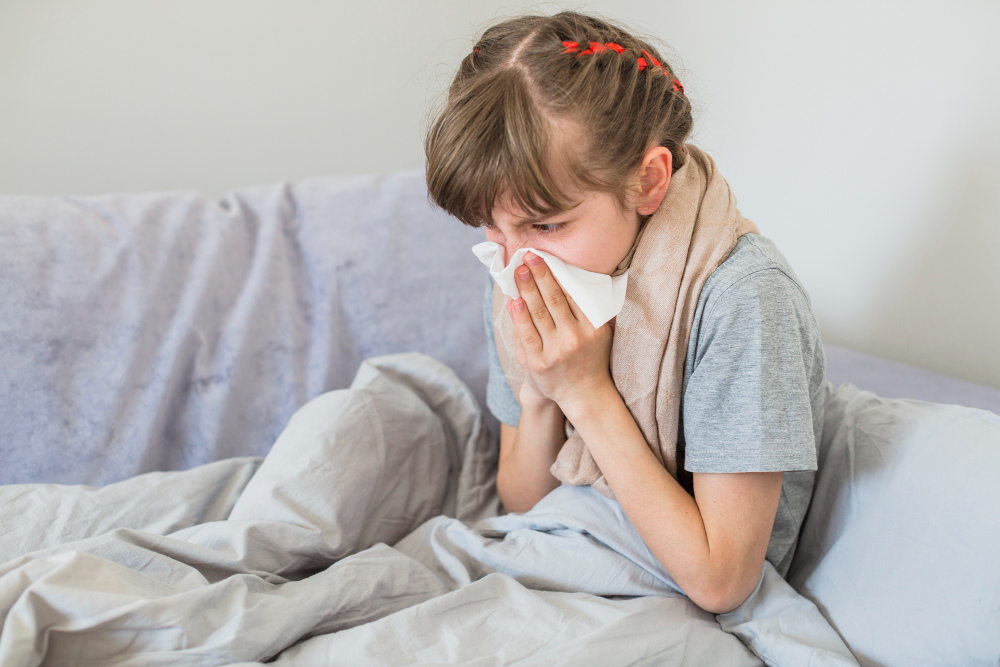
You might ask yourself, "Why does my toddler keep getting sick?" if your child appears to have a runny nose, cough, or congestion every few weeks. The cycle might seem virtually constant to many parents—one cold gets better, and then another appears to come on soon after.
The good news is that, especially in the early years of life, getting colds frequently can be a natural part of early infancy. While their immune systems are still maturing, young children are exposed to a variety of respiratory infections. Youngsters who have elder siblings or attend daycare or preschool may come into contact with even more diseases.
The American Academy of Pediatrics states that during the first two years of life, most children get eight to ten colds, and children in daycare may get even more.
Frequent symptoms, however, shouldn't necessarily be written off as "just another cold." A pediatrician may be required to assess persistent symptoms, breathing issues, stunted growth, recurrent difficulties, or especially severe illnesses.
There is no one figure that indicates how many colds are "too many" for each youngster. Every year, children can get multiple respiratory infections, especially when they start preschool or daycare.
While a cough can occasionally endure for several weeks, a regular cold can last between seven and fourteen days. This implies that even when a youngster is truly recuperating from one infection and then contracting another, they may appear to be ill virtually constantly.
For this reason, parents might look up "Toddler keeps getting colds every 2 weeks."
For instance:
It may actually be caused by multiple distinct viral infections, but it can seem like a single, protracted disease.
Understanding the reason for frequent colds and coughs in toddlers begins with comprehending how quickly respiratory infections spread.
Not all respiratory viruses have previously been encountered by toddlers. After coming into contact with various viruses, their immune systems progressively strengthen their defenses.
There is more than one virus that causes the common cold. Rhinoviruses are among the most prevalent respiratory viruses that can produce cold symptoms.
Children's immune systems become more adept at identifying these infections as they get older.
There are several potential for viruses to spread in childcare settings. Toddlers often touch each other's faces, play together, and share toys.
Children can get viruses into their bodies by touching their lips, nose, or eyes after coming into contact with a contaminated object or surface.
Respiratory infections may be more common in children in their first year of group daycare. In the years that follow, the number frequently declines as kids become more resistant to viruses that are frequently in circulation.
Your toddler may frequently bring respiratory viruses home if they have an older sibling who attends school.
An older child may spread the virus to a younger sibling even if they only have minor symptoms.
Because older siblings bring diseases home from school and daycare, younger siblings are two to three times more likely to be hospitalized for respiratory viruses like RSV during their first few months of life.
Toddlers instinctively use their hands to investigate their environment. Tables, door handles, toys, and other frequently handled items can spread respiratory viruses.
Additionally, young children regularly touch their lips, nose, and eyes, which facilitates the entry of viruses into the body.
Toddlers touch everything because tactile exploration helps them learn how the world functions and forms important brain connections.
It's also crucial to remember that a youngster is not always immune to all viruses after recovering from one cold.
As a result, after recovering from one viral infection, your kid may quickly contract another.
The common cold can be caused by more than 200 different respiratory viruses, the most prevalent of which are rhinoviruses.
It's not always a sign that something is wrong if your toddler keeps getting colds every 2 weeks.
Examining your child's general health in between illnesses is a better method to evaluate the problem.
A youngster who regularly has simple colds could still:
Children frequently get mild respiratory infections.
If infections appear especially severe, protracted, or complicated, or if your child's health does not return to normal in between bouts, consult your pediatrician.
A medical evaluation is particularly crucial if your child has:
These symptoms do not always indicate that a youngster has an immunological issue. They do, however, merit expert assessment.
Not every recurrent cough or runny nose is brought on by a fresh viral infection.
Sometimes, especially when symptoms last for weeks or happen at the same time every year, allergies can resemble colds.
Symptoms of an allergy could include:
One helpful contrast is that allergies are far more likely to cause itching than a typical cold. Therefore, a pediatrician should be consulted if symptoms are seasonal or persistent.
The majority of simple colds get better on their own. Making the youngster more comfortable as their body heals is usually the aim.
Parents and their pediatrician can talk about age-appropriate symptom alleviation. While rest and enough fluids are crucial, saline nasal drops or spray can help reduce nasal congestion.
Additionally, parents should refrain from giving their young children over-the-counter medications for colds and coughs without first consulting a doctor. According to the American Academy of Pediatrics, children under the age of four should not regularly take over-the-counter cough and cold remedies, and children between the ages of four and six should see a doctor.
Viral colds cannot be treated with antibiotics. They should only be administered when a medical practitioner concludes that they are necessary to treat a bacterial illness.
While most colds are not harmful, some symptoms need to be treated.
If your child's symptoms are very severe, persistent, or worsening rather than improving, get in touch with their doctor.
Seek immediate medical attention if your kid exhibits:
For respiratory illnesses, the CDC explicitly advises medical assessment if there is difficulty breathing, dehydration, a persistent fever, symptoms that don't go away for more than ten days, or symptoms that get better but then come back or get worse.
Parents should heed their pediatrician's instructions regarding age-specific fever thresholds because fever in very young newborns may necessitate a more immediate assessment.
So, is it typical for children to have colds often? Yes, in a lot of situations.
Many respiratory viruses are encountered by toddlers, especially if they have school-age siblings or attend daycare or preschool. The majority of kids get many colds every year, and in their first two years of life, small children may get eight or ten colds.
As a result, if your toddler keeps getting colds every 2 weeks, don't assume that their immune system is weakened. Sometimes the symptoms are just a persistent cough from a prior cold or overlapping illnesses.
The severity of the infections, the duration of the symptoms, and the child's ability to recover between illnesses should all be taken into consideration by parents. A pediatrician should be consulted for persistent, severe, or uncommon infections.
When in doubt, your doctor can better comprehend the pattern if you just document your child's symptoms, temperature, length of illness, meds, and recuperation.
Toddlers' developing immune systems and repeated exposure to respiratory viruses are the most common causes of frequent colds and coughs. Exposure can be increased by siblings, daycare attendance, and close interaction with other kids.
There isn't a precise figure that works for every child. According to the American Academy of Pediatrics, most kids get eight to ten colds in their first two years of life, and kids in daycare might get more.
See your pediatrician if your kid has breathing difficulties, dehydration, poor feeding, prolonged fever, or other troubling symptoms, or if their symptoms are severe, chronic, or consistently getting worse.


