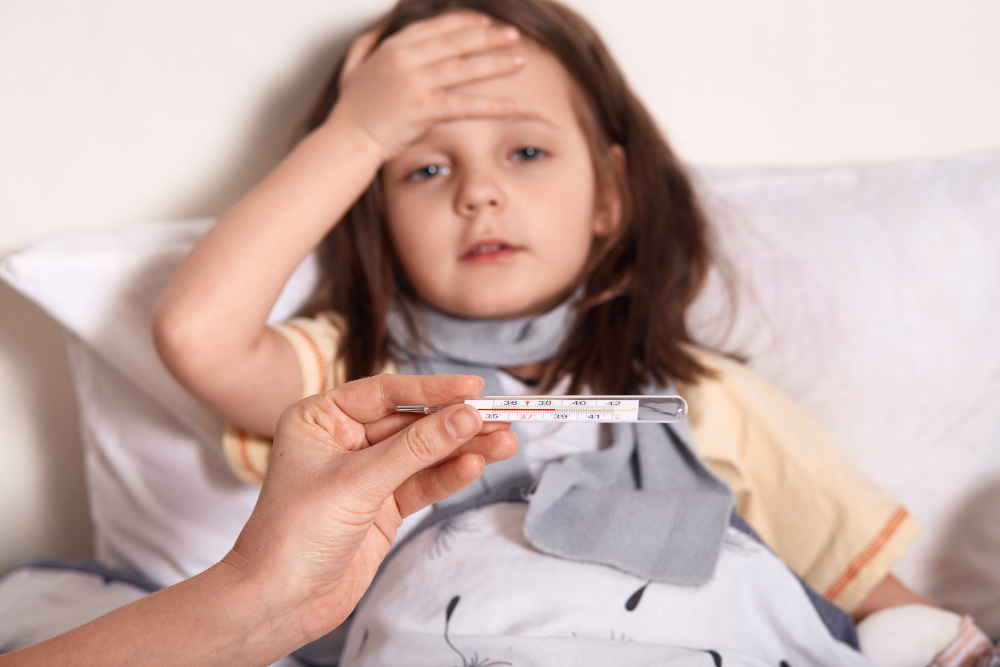
One of the most frequent reasons parents seek medical attention for their kids is fever. Fever is typically the body's normal reaction to an infection and does not always signify a dangerous illness. However, it is understandable that parents may get concerned when a kid has a recurring fever, with episodes that recur even after the youngster seems to be recovering.
Frequent viral infections, bacterial infections, or, less frequently, inflammatory and periodic fever disorders can all cause recurrent fever in children. Children who attend daycare or school may be exposed to multiple diseases in close proximity to one another, making it occasionally challenging to distinguish between multiple distinct infections and a single, protracted illness.
The fever's pattern is important. The frequency of the fever, the duration of each episode, the child's overall health in between episodes, and the co-occurrence of symptoms like sore throat, mouth ulcers, enlarged lymph nodes, abdominal pain, rash, joint pain, cough, or urine symptoms are all factors that doctors may take into account.
The common causes of recurrent fever in children, warning indications parents should be aware of, how doctors assess recurrent fever episodes, and why a professional medical evaluation is crucial are all covered in this book.
Fever bouts that recur frequently, interspersed with times when the child's temperature returns to normal, are sometimes referred to as recurrent or periodic fever. Recurrent fever is characterized by discrete episodes interspersed with intervals of recovery, in contrast to a fever that lasts for several days.
A youngster may have recurrent fevers due to:
It's crucial to keep in mind that a child's persistent fever does not always indicate a dangerous illness. Frequent viral exposure at home, at school, or at childcare might lead to several infections happening one after the other.
In children, a fever is typically defined as a temperature of approximately 100.4°F (38°C) or higher, though the proper measurement technique may change depending on the child's age.
A child's recurrent fever is most frequently caused by a sequence of distinct viral or bacterial infections, such as colds, ear infections, or throat bugs, that are acquired one after the other.
Viral infections are one of the most common reasons for fever in children. Colds, flu, respiratory tract infections, and many other viral diseases may cause fever, cough, stuffy nose, sore throat, tiredness, vomiting, or diarrhea.
Children, especially those who attend day care or school, frequently get sick with viral infections. Often such infections come one after another, so that it seems that a child has a constant fever.
Usually viral infection breaks down on its own, as the child’s immune system fights off the virus. However, if fever keeps coming, parents should write down all the symptoms and consult with a pediatrician.
Recurrent or relapsing fever may also result from bacterial infections. Potential causes are as follows:
The symptoms that come along with the fever can offer valuable clues. For instance, pain during urination could point to a urinary infection, whereas a lingering cough or trouble breathing may indicate a respiratory infection.
A fever that comes back after it first went away can at times signal that a new infection has appeared or that an existing condition needs further assessment.
PFAPA syndrome ranks among the more widely recognized periodic fever disorders affecting children. The acronym PFAPA refers to Periodic Fever, Aphthous Stomatitis, Pharyngitis and Adenitis.
Children affected by PFAPA may have recurring bouts of high fever, which often arise at fairly predictable intervals. Episodes may come with:
One key characteristic is that children often seem well in between episodes. Before diagnosing, doctors review the pattern and rule out infections and other possible causes.
Parents ought not to assume that any recurring fever is PFAPA. A pediatrician must evaluate the full clinical history and symptoms.
Certain children are affected by uncommon genetic disorders that lead to recurring fever and inflammation. Cases in point are Familial Mediterranean Fever (FMF), TRAPS, and Mevalonate Kinase Deficiency (MKD/HIDS).
FMF may lead to recurring bouts of fever accompanied by pain in the abdomen, chest, or joints. These episodes typically persist for one to three days.
TRAPS may result in repeated fever, together with symptoms like muscle pain, abdominal pain, rash, and eye inflammation.
MKD/HIDS may lead to recurring fever episodes that last several days, at times accompanied by abdominal symptoms, diarrhea, vomiting, headaches, mouth sores, rashes, or joint symptoms.
Such conditions are rare, yet they might be taken into account when fever episodes display a distinctive pattern and common infections fail to fully account for them.
Repeated fever can also be caused by cyclic neutropenia. It is characterized by recurring drops in neutrophils, a white blood cell type that aids in fighting infections.
When neutrophil counts are low, a child might experience fever, mouth ulcers, a sore throat, or infections. Since symptoms often return in a predictable cycle, doctors may suggest monitoring blood tests over time instead of depending on one test.
Cyclic neutropenia is rare, but it may be suspected when a child has recurring, stereotyped infections or episodes of fever.
Recurrent fever does not always result from infection. In certain children, inflammation linked to conditions like juvenile idiopathic arthritis, inflammatory bowel disease, or other systemic inflammatory disorders may lead to fever that is prolonged or recurring.
Additional symptoms can offer valuable clues, such as:
As an example, inflammatory bowel disease may produce fever along with abdominal pain, diarrhea, weight loss, and other signs of inflammation.
When a fever lingers or keeps coming back with no clear reason, doctors may sometimes look into rarer causes. Based on the child's symptoms and medical history, these may involve tuberculosis, ongoing infections, inflammatory conditions, and, in rare cases, some types of cancer.
A child having recurring fevers on its own does not indicate that they have one of these serious illnesses. What matters far more is the complete clinical picture—such as growth, energy levels, physical examination results, and related symptoms.
While the pattern of the fever matters, the symptoms that come along with it can assist doctors in determining the root cause.
Parents ought to observe if the child has:
Documenting these symptoms can help make a pediatric visit more effective.
No single test can pinpoint every cause of recurrent fever in children. Diagnosis typically starts with a thorough history and physical examination.
Parents might be asked:
Keeping a fever diary can be especially useful.
A pediatrician might check the child's throat, ears, lungs, abdomen, skin, lymph nodes, and joints. The child's growth and overall development may also be assessed.
Based on the suspected cause, the doctor might suggest tests like a complete blood count, inflammatory markers, urine testing, cultures, or other specific investigations. For children who experience frequent infections, testing of the immune system may occasionally be taken into consideration.
Testing ought to be directed by the child's history and examination instead of being done without clear reason.
Parents ought to seek a medical evaluation when a fever keeps coming back with no obvious cause, especially if the episodes are growing more frequent or are interfering with the child's usual activities.
A medical assessment becomes particularly important if recurrent fever happens alongside:
Frequent infections are usually the result of normal childhood exposure rather than an immune deficiency, but infections that are unusually severe, complicated, persistent or hard to treat justify further evaluation.
Parents ought to get emergency medical care when a child with a fever:
In infants under 3 months old, a temperature of 100.4°F (38°C) or above calls for immediate medical evaluation.
When a child has a fever, the main priorities are keeping them comfortable and well hydrated.
Give fluids often and watch for indications of dehydration. Keep the child dressed in comfortable clothing instead of wrapping them in too many layers. For some children, fever-reducing medications like acetaminophen or ibuprofen may be suitable, but the dose should be determined by the child's age, weight, and medical guidance or the product's instructions.
Never administer antibiotics without a doctor's recommendation. Antibiotics are ineffective against viral infections, and using them inappropriately can lead to side effects and add to the problem of antibiotic resistance.
Above all, keep track of how the fever behaves. Note the temperature, the date, how long it lasts, any accompanying symptoms, and whether the child fully returns to normal in between episodes.
Keeping a basic fever log can offer useful insights.
|
Information |
What to Note |
|
Date |
When the episode begins |
|
Temperature |
Highest measured temperature |
|
Duration |
Number of days |
|
Symptoms |
Sore throat, cough, rash, stomach pain, etc. |
|
Treatment |
Medicines recommended by the doctor |
|
Response |
Whether the child improves |
|
Between episodes |
Completely well or ongoing symptoms |
This information can assist the pediatrician in determining whether the child is dealing with recurring infections or a more consistent pattern of periodic fever.
Children can experience recurrent fever for a variety of reasons, and repeated viral infections are frequently the cause. Yet when episodes recur in a predictable manner or come alongside mouth ulcers, swollen glands, abdominal pain, joint symptoms, rashes, poor growth, or unusually severe infections, a medical assessment is warranted.
Disorders like PFAPA and other periodic fever syndromes are rare, but they become significant possibilities when common infections fail to account for the pattern. Taking a thorough medical history, performing a physical exam, and ordering the right tests can assist in pinpointing the cause.
Parents ought not to fixate solely on the number on the thermometer. A child's breathing, hydration, alertness, activity level, and other symptoms matter just as much. Should the fever continue to return or the child seem to be getting sicker, seeing a pediatrician is the safest course of action.
The most frequent reason is usually recurring viral infections, especially in children who attend school or daycare. Additional causes include bacterial infections, periodic fever syndromes like PFAPA, inflammatory conditions, and, more rarely, immune-system or other underlying disorders.
You should talk to a pediatrician about recurring fever if episodes keep happening with no clear reason, follow a regular pattern, last longer than they should, or come along with symptoms like weight loss, poor growth, joint swelling, ongoing diarrhea, rash, or infections that are unusually severe.
Get medical attention right away if a child looks very sick, struggles to breathe, is severely dehydrated, has a stiff neck, a seizure, a worrisome rash, keeps vomiting, or is unusually sleepy. Infants under 3 months old whose temperature reaches 100.4°F (38°C) or above require immediate medical assessment.


