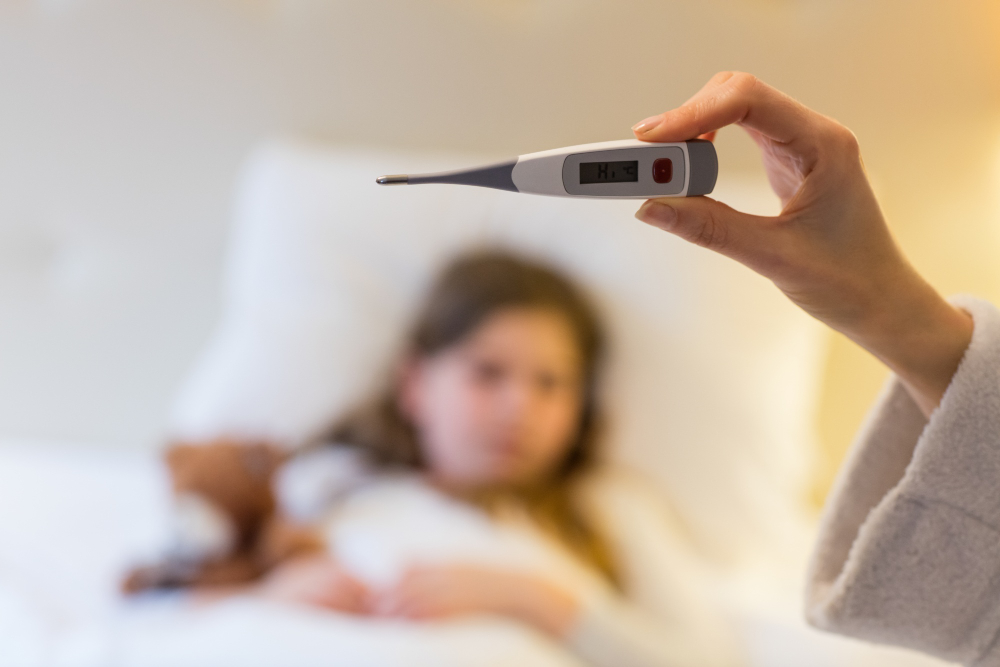
When a child has a fever, it can be a cause for concern, particularly if the temperature rises during the night or the child seems distressed. Parents often ask how to bring a child’s temperature down, but the main aim of care is not always to return the thermometer reading to normal as quickly as possible.
A fever is typically the body’s natural reaction to an infection. What counts most is how your child appears and acts, whether they are taking in fluids, breathing without difficulty, and whether any warning signs of a serious illness are present. In children, a temperature of 38°C (100.4°F) or above is generally regarded as a fever.
For many children with a mild illness, supportive care at home may be suitable. Very young infants and children who have worrying symptoms might require a prompt medical evaluation.
This guide covers approaches to managing fever at home without medicine, what parents can do during the night, when fever medicines may be suitable, and when to seek care from a pediatric professional in Thane.
Fever is frequently linked to infections, especially viral ones like colds and the flu. A high temperature can also result from other infections and illnesses.
A fever in itself is not always the sickness. Rather, it indicates that the body is reacting to something, usually an infection.
When the immune system reacts to an infection, the way the body regulates its temperature can shift. As a result, the body becomes warmer than it normally is.
A child who has a fever might also:
The temperature reading offers helpful information, but parents should not rely on it alone. How alert a child is, their breathing, hydration, and general behaviour all matter as well.
Parents often look for ways to manage a fever at home without medicine, especially when the child seems comfortable otherwise.
Usually, the aim of home care is to keep the child comfortable and well hydrated while watching for signs that the illness is getting worse, instead of trying to force the temperature back to completely normal.
Keeping a child with fever well hydrated is an important part of their care.
Give fluids at regular intervals. Based on how old the child is, this could include:
If your child is unwilling to take a large amount at one time, give smaller amounts more often.
Be alert for signs of dehydration, including a very dry mouth, noticeably less urination, fewer wet diapers, sunken eyes, or being unable to keep fluids down.
Do not bundle up a child with a fever in several blankets or layers of clothes.
Excess layers may cause discomfort for a child and disrupt the body’s normal release of heat.
Choose lightweight, comfortable clothes and maintain a comfortable room temperature.
If your child is shivering, keep them comfortable instead of intentionally trying to cool them down.
Battling an infection can leave children feeling exhausted.
Let your child sleep and rest as much as they require, while still checking on them regularly.
Rest tends to be especially beneficial when a fever comes with cold symptoms, a sore throat, body aches, or overall tiredness.
A fever at night can be worrying, as parents often wonder whether to wake their child, give medication, or wait until morning.
When your child has a mild illness and seems comfortable otherwise, concentrate on monitoring instead of attempting to bring the temperature down by force.
The NHS recommends that a child with a fever be checked on a regular basis, including through the night.
Watch out for changes like:
If your child is resting comfortably, breathing as they should, and showing no warning signs, unnecessary interventions may not be helpful.
Avoid:
The goal is comfort, not bringing the temperature down quickly.
A fever is frequently part of how the body reacts to illness, and it does not usually settle instantly.
A practical aim is to:
Keep the child comfortable → Maintain hydration → Monitor symptoms → Identify warning signs → Seek medical care when necessary.
When used correctly, fever-reducing medicine can bring the temperature down and make the child more comfortable, but it may not address the root cause of the fever itself.
Medicine for fever may occasionally be given when a child is feeling uncomfortable or upset. The right medicine and dosage are determined by things like the child’s age, weight, medical background, and the specific product being given.
Paracetamol (acetaminophen) and ibuprofen are frequently used to treat fever in children, yet they are not suitable for every child.
Never estimate a child’s dose just from what was given to an older brother or sister.
When giving liquid medicines, use the dosing syringe or measuring tool that comes with the medicine instead of a spoon from the kitchen. The American Academy of Pediatrics advises basing the proper acetaminophen dose on a child’s weight and consulting a doctor if you are unsure.
Ibuprofen comes with restrictions based on age and health. For instance, the American Academy of Pediatrics recommends avoiding it in infants under 6 months old unless a doctor instructs you otherwise.
The NHS likewise cautions against ibuprofen in some cases, such as dehydration and chickenpox, and suggests seeking medical advice for certain children with asthma.
Aspirin should not be given to children under 16 as a matter of routine, unless a healthcare professional has specifically prescribed or recommended it.
Keeping a child at home may be appropriate if the illness is mild, the child is drinking enough, is alert and responsive, and shows no worrying symptoms.
For instance, a child who has a fever along with mild cold symptoms but is still engaging with others, taking fluids, and breathing without difficulty can often be watched at home with proper care.
Even so, parents should keep watching the child, since symptoms may change.
Some children need to be evaluated by a doctor even if the fever does not appear to be very high.
Get in touch with a pediatrician if:
For infants under 3 months with a temperature of 38°C (100.4°F) or above, the American Academy of Pediatrics advises immediate medical evaluation.
Certain symptoms call for immediate emergency medical care instead of treatment at home.
Get emergency help if your child:
These warning signs may point to a serious illness and should not be handled with home remedies on their own.
A fever is sometimes linked to a febrile seizure, especially in younger children.
Even though febrile seizures can be alarming, most of them are short. A seizure that continues for more than five minutes is a medical emergency, according to the NHS.
While a seizure is happening:
Never attempt to force medicine, water, or food into a child who is currently having a seizure.
Careful monitoring allows parents to tell if the child is getting better or if their condition is worsening.
Use a digital thermometer as directed by its instructions.
Write down the following:
Such details may be helpful when talking with a pediatrician.
Ask yourself:
These observations may matter just as much as the temperature reading itself.
A frequent error is concentrating solely on bringing the temperature back down to 37°C.
A fever on its own is not necessarily dangerous. According to the American Academy of Pediatrics, how the child looks and behaves overall matters greatly when judging how worrying a fever might be.
Rather than asking only:
“How can I make the temperature normal?”
also consider:
“Is my child comfortable, hydrated, alert, and breathing normally?”
This wider view can help parents decide what to do next.
Consult a pediatrician if your child has a fever that won’t go away, shows worrying symptoms, or if you are not certain that home care is appropriate.
Families looking for a child hospital in Thane or pediatric emergency care may wish to consider the following:
Parents should confirm current services and emergency availability directly with any facility before relying on it.
If a child shows emergency warning signs, get urgent medical care instead of waiting for a routine appointment.
Since infections are common, parents cannot prevent every fever in childhood. Still, they can lower the risks by keeping up good daily health habits.
Instruct children to:
Staying well hydrated is especially crucial when dealing with illnesses that involve fever, vomiting, or diarrhea.
To keep children adequately hydrated, give water frequently, track how much they drink, and give them foods that contain plenty of water.
If your child suffers from a chronic illness or a compromised immune system, consult their pediatrician about what steps to take when a fever arises.
Children who have specific medical conditions might require earlier evaluation compared to those who are otherwise healthy.
The objective is generally not to get rid of a fever right away. Parents should keep the child comfortable, give plenty of fluids, allow rest, avoid too many layers of clothing or harsh cooling techniques, and keep a close watch on how the child is doing.
For night-time care, check on your child often, make sure the sleeping area is comfortable, and look out for shifts in breathing, hydration, alertness, and behaviour.
No home method lowers a fever instantly. The appropriate action depends on the child’s age, temperature, symptoms, and overall health.
Be familiar with the warning signs. Breathing difficulties, seizures, extreme dehydration, odd sleepiness, confusion, a worrying rash that doesn’t fade when pressed, or fever in a very young baby all call for immediate medical care.
If you are unsure, consult a pediatrician.
Give the child plenty of suitable fluids, promote rest, dress them comfortably without too many layers, and check their condition often. Avoid using ice baths or rubbing alcohol on the skin. The aim is to keep the child comfortable and well hydrated instead of bringing the temperature back to normal right away.
Dress your child in comfortable clothing, keep the room at a pleasant temperature, give fluids whenever they are awake, and check on them often through the night. Be alert for dehydration, trouble breathing, unusual sleepiness, seizures, or any other worrying symptoms.
Get emergency medical help if your child is struggling to breathe, is hard to wake, has a seizure, appears severely dehydrated, develops a worrisome rash, becomes confused or unusually unresponsive, or displays any other signs of a serious illness. An infant under 3 months old with a temperature of 38°C (100.4°F) or above requires immediate medical evaluation.


